Dyness Battery Range Explained: DL5.0F, PowerBrick and STACK Systems
Dyness has become one of the most fitted lithium battery brands in South Africa, and its range now runs from a single 5 kWh wall-mount pack to stackable systems of more than 240 kWh. The names can be confusing, so here is how the range fits together and which product suits which job.
Low-voltage or high-voltage: the first decision
Every Dyness battery belongs to one of two families, and the inverter decides which one you need.
- Low-voltage (48 V / 51.2 V) batteries work with low-voltage hybrid inverters, the kind used on most homes and smaller businesses (for example Deye’s single-phase and smaller three-phase LV models). Extra capacity is added by connecting batteries in parallel.
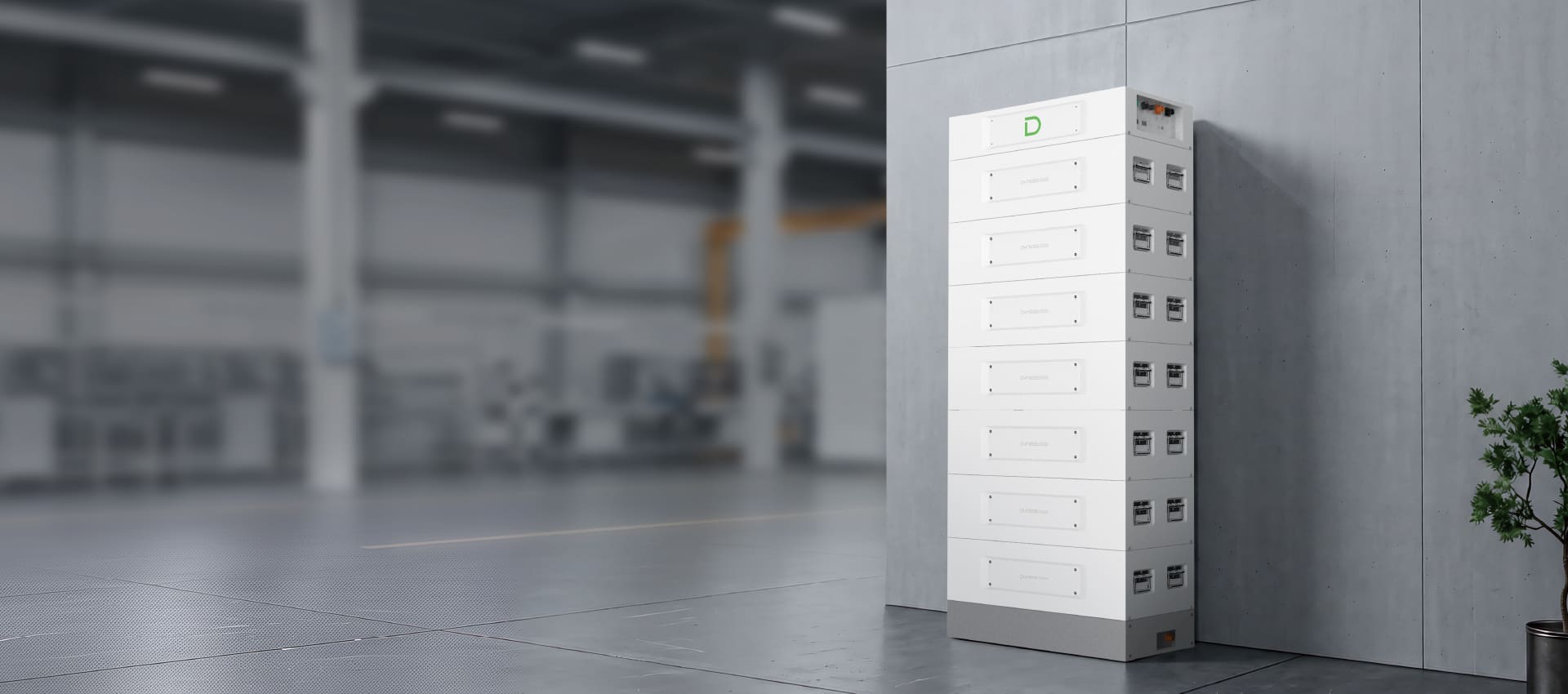
- Stack systems combine battery modules with a control unit (BDU) on top. They are designed for larger systems and high-voltage hybrid inverters in commercial and industrial (C&I) installs.
Always check the inverter’s battery compatibility list before you order. Mixing families is not an option.
The low-voltage range
DL5.0F: 5.12 kWh building block
A compact 5.12 kWh LiFePO4 pack that Dyness rates for up to 50 units in parallel. It suits smaller residential systems, backup for small offices, and anywhere you want to start small and add capacity later. We list it with a 7-year or a 10-year warranty option: DL5.0F (7-year) and DL5.0F (10-year).
PowerBrick: 14.3 kWh floor-standing
The PowerBrick packs 14.336 kWh into one floor-standing unit on castors, built on 280 Ah cells. Dyness quotes a cycle life of at least 8,000 cycles or 10 years, and up to 50 units in parallel (from 14.3 kWh to about 717 kWh). One PowerBrick replaces three 5 kWh wall packs, with less cabling and one BMS connection: Dyness 14.3 kWh PowerBrick.
PowerBrick Max: 16.07 kWh
The Max moves to 314 Ah cells for 16.07 kWh per unit (up to 803.5 kWh in parallel). For a business installing 30–50 kWh of storage on a low-voltage system, two or three of these is a tidy, serviceable bank: Dyness PowerBrick Max 16.07 kWh. The IP65 PowerBrick Plus suits installs where the battery needs to sit outdoors or in a dusty plant room.
The stack systems
Stack systems are where Dyness gets interesting for C&I. Modules sit on a base, stack vertically, and a control unit on top manages the bank. You buy the modules, the control unit and the base separately, which is why you will see them as separate products in our catalogue.
| System | Module size | System size (Dyness) | Typical use |
|---|---|---|---|
| STACK100 | 5.12 kWh | 15.36–76.8 kWh | Small business, larger homes |
| STACK280 | 14.3 kWh | 43–215 kWh | Small to mid C&I |
| STACK314 | 16 kWh (S51314) | 48.2–241.1 kWh | Small to mid C&I, best kWh per footprint |
STACK100 is the entry point: 5.12 kWh modules with the STACK100 control unit.
STACK280 steps up to 14.3 kWh modules with the STACK280 control unit. Fewer modules for the same capacity means less cabling and fewer failure points.
STACK314 is the newest and densest, built from 16 kWh S51314 modules. Dyness rates a single system from 48 kWh to just over 241 kWh, which covers most farms, workshops, retail sites and small factories.
Which one should you choose?
- Home or small office on a low-voltage inverter: DL5.0F packs, or one PowerBrick if you already know you need 14 kWh or more.
- Business on a low-voltage inverter needing 30–50 kWh: two or three PowerBrick Max units.
- C&I site on a high-voltage hybrid inverter: a stack system. STACK314 gives the most capacity per footprint; STACK280 is a proven alternative.
Get a quote
Browse the full Dyness battery range, or send us your load profile and inverter model and we will size the bank for you. Add the products to your quote list, or WhatsApp us on 065 762 0372. Delivery is included within 50 km of our Spartan, Johannesburg depot.
Specifications are from Dyness’s published product information at the time of writing. Always confirm against the current datasheet and your inverter’s compatibility list before installation.