Choosing a Deye Hybrid Inverter: Low-Voltage vs High-Voltage, Single vs Three-Phase
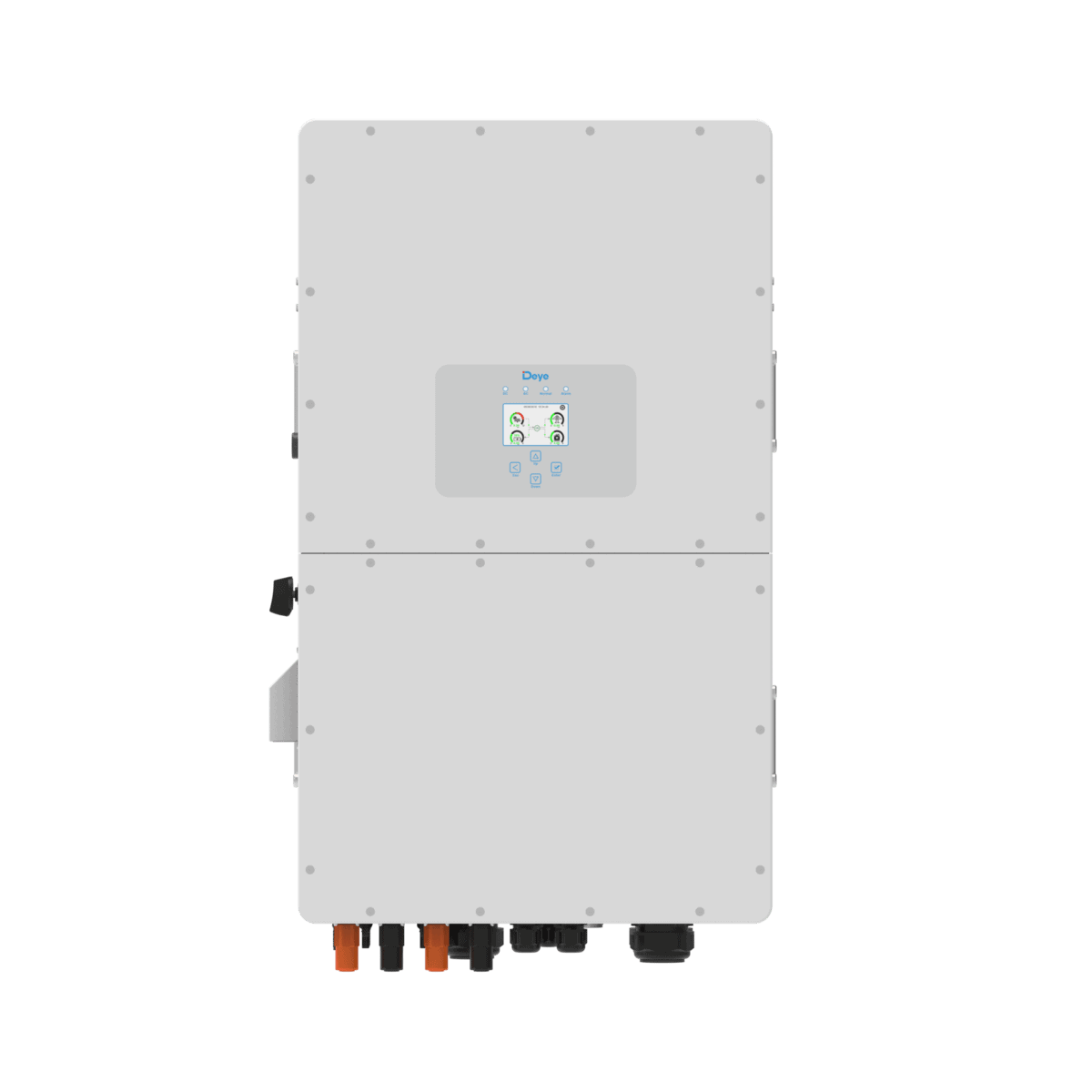
Deye hybrid inverters are probably the most common sight in South African solar installs, from 5 kW home systems to 125 kW commercial sites. Choosing the right one comes down to three questions: how many phases the site has, how much power it needs, and whether the battery bank will be low-voltage or high-voltage.
1. Single-phase or three-phase?
Match the inverter to the supply. Homes and small shops are usually single-phase; farms, workshops and commercial buildings are usually three-phase. Deye makes both, and its three-phase models handle unbalanced loads across the phases, which matters on sites where one phase carries most of the load.
2. Low-voltage or high-voltage?
This is the decision that shapes the whole system.
- Low-voltage (LV) inverters run on 48 V batteries (Deye lists a 40–60 V battery range). They cover single-phase units from 5 kW up to 18 kW and three-phase units up to 20 kW. The batteries are simple to expand in parallel and widely available.
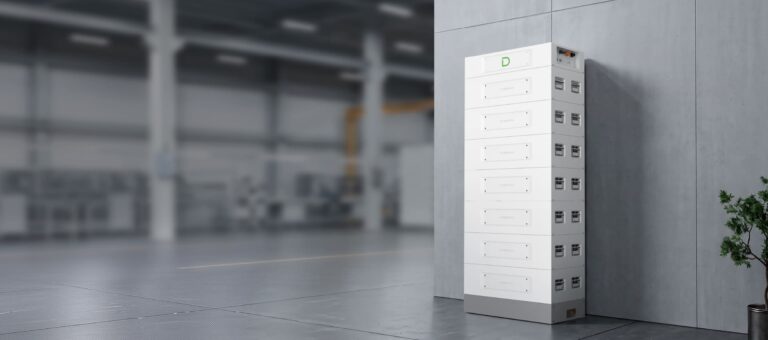
- High-voltage (HV) inverters are three-phase units for C&I, from around 30 kW up to 125 kW. They work with high-voltage battery systems (Deye lists 160–800 V on its 50 kW model), which keeps currents low on big banks, so cabling is lighter and losses are smaller.
3. How much power?
| Site | Typical choice | On our site |
|---|---|---|
| Home, small office | 5–8 kW single-phase LV | Deye 5 kW, Deye 8 kW |
| Large home, small business | 10–18 kW single-phase LV | Deye 12 kW, Deye 16 kW |
| Three-phase small business | 12–20 kW three-phase LV | Deye 12 kW 3P, Deye 20 kW 3P |
| C&I site | 50–125 kW three-phase HV | Deye 50 kW HV, Deye 125 kW HV |
Need more? Deye inverters run in parallel: up to 16 units on many LV models, and up to 10 on the 50 kW HV model, according to Deye’s specifications.
Pairing batteries with a Deye inverter
- LV inverters: Deye’s own wall-mount LV batteries (Deye batteries) or Dyness low-voltage packs such as the PowerBrick and DL5.0F.
- HV inverters: Deye’s BOS-A and BOS-B high-voltage systems, Dyness stack systems, or Genixgreen high-voltage towers. See high-voltage batteries.
Whichever you choose, check that the battery is on Deye’s compatibility list for that inverter, and that the battery BMS communicates with the inverter (CAN or RS485).
Don’t forget the AC side
Every Deye install needs proper AC protection and changeover. To save time on site, our INGE pre-wired AC boxes are matched to specific Deye models, from the 5 kW single-phase units to 50 kW three-phase and beyond. For the PV side, see the PV isolation and combiner boxes.
Get a quote
Browse all Deye inverters, or send us your site details (phases, daytime load and backup needs) and we will suggest an inverter and battery combination. Build your quote list or WhatsApp us on 065 762 0372.
Specifications are from Deye’s published product information at the time of writing. Always confirm the exact model, datasheet and battery compatibility before installation.